We get some version of this question in almost every other email: am I fit enough for this? It’s a fair worry. A permit costs several hundred dollars, the flights are long, and nobody wants to find out halfway up a ridge in Bwindi that they’ve bitten off more than they can chew.
So here’s the honest version, not the brochure version.
The short answer
Gorilla trekking in Uganda ranges from moderately tiring to genuinely tough, and the reason there’s no single answer is that the terrain changes so much from one trek to the next. Some groups walk 45 minutes on a gentle forest path and find their gorilla family resting by a stream. Others climb for six or seven hours up muddy ridges so steep that rangers cut footholds into the slope with a machete as they go.
You won’t know which kind of day you’ll get until the morning briefing, because that’s when rangers share where the trackers last spotted your assigned family the evening before.
What actually makes it hard
- Altitude — Bwindi sits between 1,160 and 2,607 metres above sea level, so the air is noticeably thinner than what most visitors are used to, even before the climbing starts.
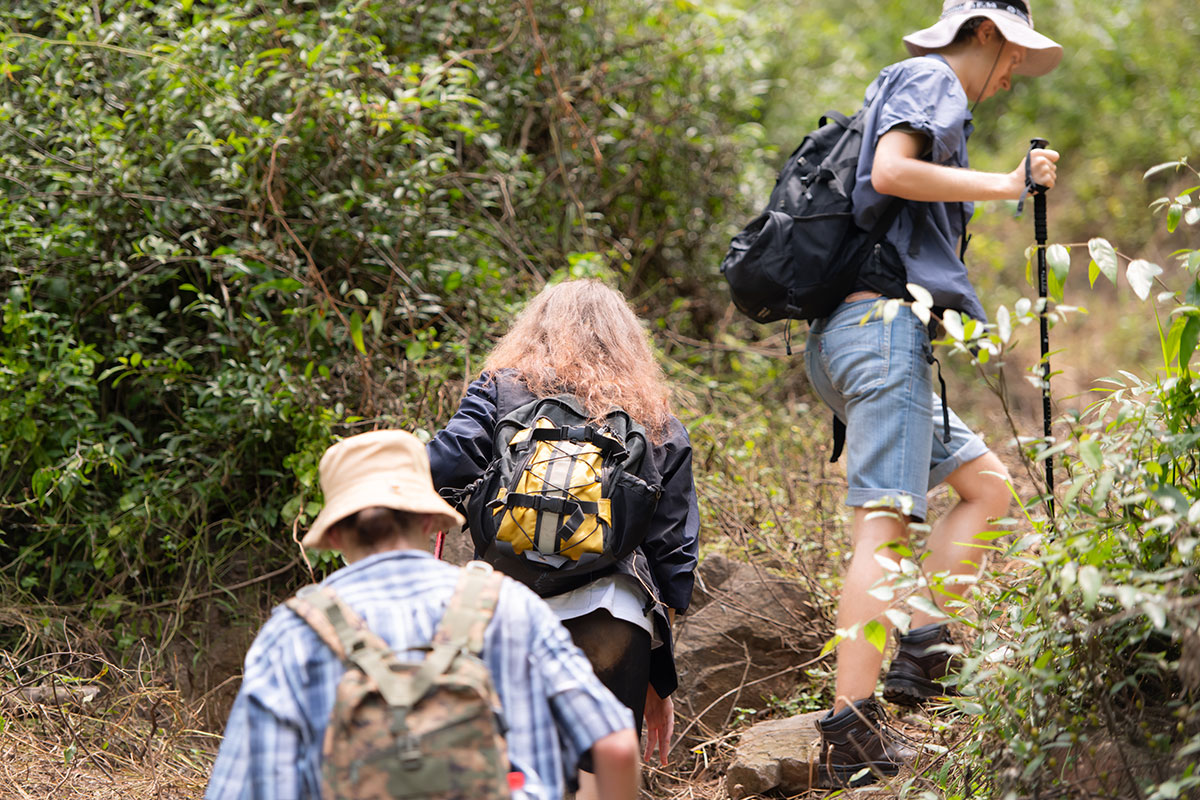
- Terrain — there are no paved trails inside the forest. Expect mud, tangled roots, loose volcanic soil, and slopes you’ll sometimes climb on all fours.
- Weather — Bwindi means “impenetrable” for a reason. Rain can fall in any month, and a dry trail can turn slick within twenty minutes.
- Unpredictability — gorillas move overnight to build new nests, so the walk-in distance is never fixed and can’t be planned around in advance.
How long does a trek actually take
Uganda Wildlife Authority allows up to eight hours of trekking, including the strict one hour you get with the gorillas once found. In practice, most groups are back at the trailhead within two to five hours round trip. Fit hikers assigned to a nearby family might be done before lunch; less fortunate groups have trekked past 3pm before finding theirs.
Does the sector you choose matter?
Yes, more than most people expect. Here’s roughly how Bwindi’s four sectors compare:
- Buhoma — generally the gentlest terrain and the most established trails, which is why it’s popular with first-time trekkers and older travelers.
- Ruhija — higher altitude and cooler air, with some genuinely steep stretches near the ridge tops.
- Rushaga — has the most habituated families of any sector, so difficulty varies family by family; it’s also where the Gorilla Habituation Experience runs.
- Nkuringo — widely considered the toughest starting point in Bwindi. The walk out, in particular, is a long, steady climb that surprises people who assumed the hard part was over.
Mgahinga Gorilla National Park, Uganda’s other gorilla park, adds volcanic slopes into the mix, since its single gorilla family roams the lower flanks of the Virunga volcanoes.
What if you’re not in great shape
This is the part most guides gloss over: you don’t need to be an athlete. Porters are available at every sector for a modest fee, and they do far more than carry your bag. They’ll pull you up muddy banks, steady you on the way down, and clear a path through nettles most visitors never even notice. For travelers with limited mobility, park rangers can also arrange a sedan-chair-style stretcher carried by a team of local porters, which has let people well into their seventies, and some with real mobility limitations, reach their gorilla family.
Hiring a porter is also one of the most direct ways your trekking fee supports the community living around the park, so it’s worth doing even if you don’t strictly need one.
How to prepare, realistically
- In the weeks before your trip, build up to comfortable 60–90 minute walks, ideally on hills or stairs.
- Break in your hiking boots well ahead of time — Bwindi’s mud is not the place to discover a blister.
- Pack gardening gloves or trekking gloves; the forest has stinging nettles that catch almost everyone at least once.
- Bring a light, breathable rain jacket rather than a heavy one — you’ll warm up fast once the climbing starts.
- Drink more water than feels necessary the day before. Altitude and exertion together dehydrate you faster than either one alone.
The bottom line
If you can comfortably walk for two to three hours on uneven ground without needing to stop every few minutes, you can do this trek. If that description makes you a little nervous, book a porter and choose a sector known for gentler terrain, such as Buhoma. The one thing almost every past trekker agrees on, regardless of how hard their particular day was: the hour spent watching a gorilla family up close makes every muddy step worth it.
Ready to pick your sector and dates? Our team can match your fitness level and travel plans to the right trek — get in touch and we’ll walk you through the options.