
Culture
Home » Things To Do » Culture
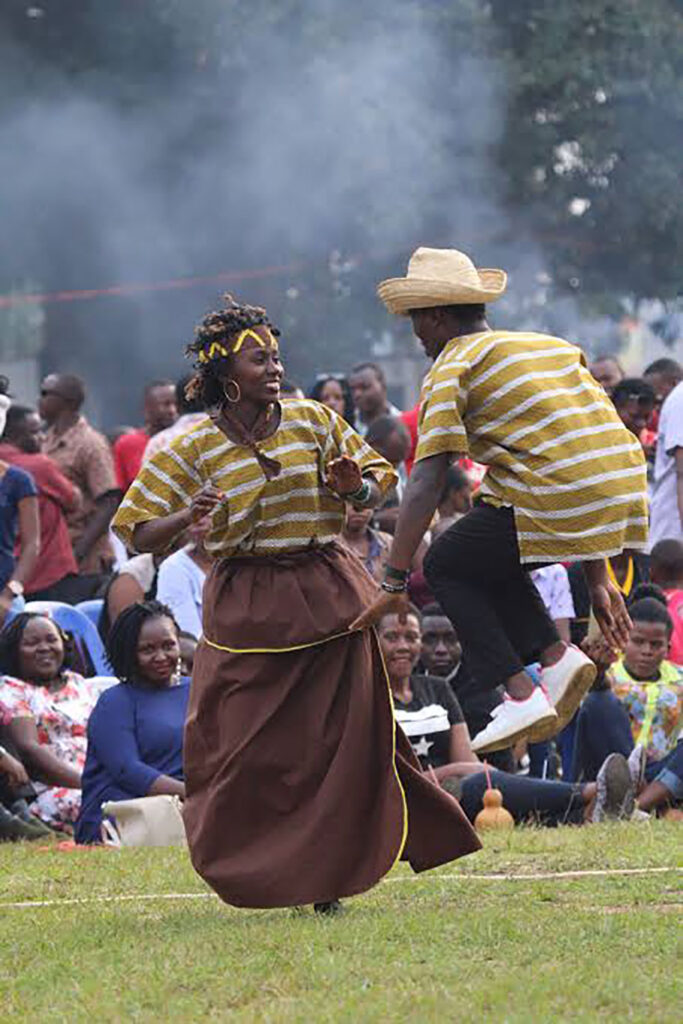
Culture & Heritage Experiences in Uganda and Rwanda
Most people come to this part of East Africa for the gorillas, and leave remembering the people as much as the primates. Uganda and Rwanda hold some of the continent’s most distinct living cultures within a short drive of the national parks: a kingdom that still crowns its own king, a forest community whose history predates the parks themselves, cattle-keepers in a region few tourists ever reach, and a country that has turned remembrance into one of its most powerful visitor experiences.
The Buganda Kingdom: Uganda’s living monarchy
Long before Uganda existed as a modern nation, the Buganda Kingdom governed much of the land around Lake Victoria, and it never stopped. The Kabaka, Buganda’s king, still holds a cultural and ceremonial role today, and Kampala itself grew up around his court.
Kasubi Tombs, a UNESCO World Heritage Site, is the obvious starting point: a thatched royal burial enclosure holding four Buganda kings, maintained by caretakers whose roles have passed down through generations. From there, the Bulange parliament building and the Kabaka’s Mengo Palace round out a visit, and the Uganda Museum nearby adds context on the dozens of other ethnic groups that make up the country.
A half-day in Kampala is enough to cover the essentials, making this the easiest cultural experience on this page to add to almost any itinerary.
The Batwa: guardians of the ancient forest
Before Bwindi and Mgahinga became national parks, they were home. The Batwa lived inside these forests for generations, relying on them for food, medicine and shelter, until conservation policy in the 1990s moved them out to protect the mountain gorillas now at the center of Uganda’s tourism industry.
Batwa-led cultural trails, run by the community itself rather than an outside operator, offer a way to hear that history directly: forest skills demonstrations, traditional hunting techniques, storytelling and song, led by people whose families once called this exact forest home. It’s a sobering history alongside a genuinely engaging cultural experience, and the visit fees go straight back to the Batwa community.
This pairs naturally with a Bwindi gorilla trek, since both start from the same park gate.
The Karamojong: Uganda’s cattle-keeping pastoralists
Karamoja, in Uganda’s remote northeast, is a part of the country most visitors never see, and that’s precisely what makes a visit worthwhile. The Karamojong maintain a pastoralist way of life built around cattle, distinct from almost anywhere else in Uganda, with thorn-fenced manyatta homesteads built to protect herds overnight.
A visit typically includes time at a manyatta, a local craft cooperative producing beadwork and baskets, and traditional dance. Because Karamoja sits several hundred kilometers from the southwestern parks, reaching it usually means a scheduled domestic flight out of Entebbe rather than a road trip tacked onto a gorilla safari.
Iby’Iwacu Cultural Village: Rwanda’s living homestead
Near Volcanoes National Park, Iby’Iwacu Cultural Village recreates a traditional royal Rwandan homestead, with a twist: it was founded partly by former poachers who now work in conservation and tourism instead. The visit includes an energetic Intore warrior dance performance, banana beer brewing, traditional medicine demonstrations and craft-making, all led by community members themselves.
It sits close enough to Musanze, Rwanda’s gorilla trekking hub, to fit naturally either before or after a Volcanoes National Park trek.
Kigali’s history: the genocide memorials
Understanding modern Rwanda means engaging honestly with 1994. The Kigali Genocide Memorial at Gisozi, the resting place of more than 250,000 victims, documents the history leading up to the genocide against the Tutsi, the events themselves, and the country’s path since, with a dedicated children’s room that visitors often find the most affecting part of the visit.
This is not a typical sightseeing stop, and it shouldn’t be treated as one. Memorial guides are trained specifically to host visitors with care, quiet and attentive conduct is expected, and photography is restricted in parts of the site. Travelers who want a deeper, more unfiltered complement to Gisozi’s national-level exhibition can also visit a district memorial such as Nyamata or Ntarama, both former churches a short drive outside the city.
Markets, music and everyday life
Beyond the named sites, both capitals reward simply walking through them. Kampala’s Owino Market and Kigali’s Kimironko Market are where daily life actually happens, loud, crowded and far removed from any tour itinerary. Kigali’s Nyamirambo neighborhood runs community-led walking tours through its tailoring shops and street life, and Inema Arts Center showcases contemporary Rwandan painting and sculpture for anyone wanting a more modern cultural counterpoint to the historical sites.
How to experience this culture respectfully
- Choose community-run or community-partnered programs, where visit fees go directly to the people hosting you, not just a tour operator
- Ask before photographing people, homes or ceremonies, the same courtesy you’d expect at home
- Listen more than you photograph, especially at the Batwa trail and the genocide memorials, where the value of the visit is in what you hear
- Follow each site’s specific guidance on dress, conduct and photography, particularly at religious and memorial sites
- Treat a cultural visit as seriously as a wildlife one when planning your schedule, rather than squeezing it into a spare hour
Build a trip around it
Two ready-made itineraries on this site are built entirely around these experiences:
- 5-Day Uganda Heritage Trail: Buganda Kingdom, Batwa and Karamojong, connecting all three by scheduled flight
- 4-Day Rwanda Culture and Memory Tour: Kigali, Genocide Memorials and Iby’Iwacu
Either can also be added as a short extension to an existing gorilla trekking itinerary, since the Batwa trail and Iby’Iwacu both sit close to the main trekking hubs.