
Fitness and Difficulty
Home » Gorilla Trekking » Gorilla Trekking Guide » Fitness and Difficulty
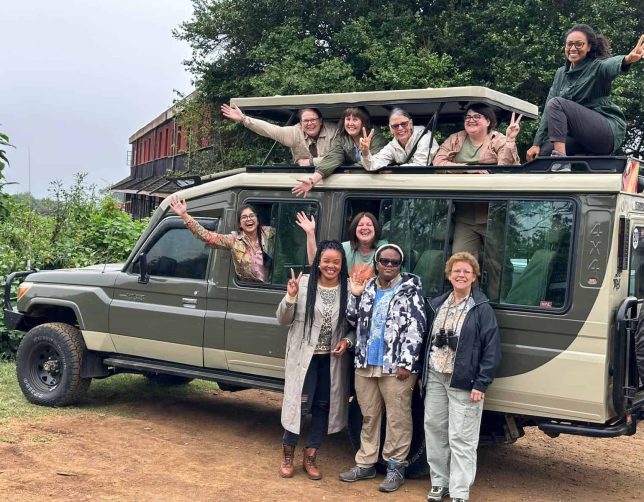
Gorilla Trekking Difficulty: Fitness Level, Terrain and How to Prepare
Almost everyone who emails us about gorilla trekking asks some version of the same question before they ask anything else: am I actually fit enough to do this? It’s a fair thing to worry about. You’re committing real money to a permit, flying a long way, and then handing your morning over to a forest trail that nobody can promise you the length of in advance.
The honest answer is that most reasonably active adults manage it without serious trouble, but “reasonably active” is doing some work in that sentence.
So, how difficult is gorilla trekking, really?
There’s no single answer, and any page that gives you one specific number of hours is guessing. Gorillas are wild animals that move through the forest feeding as they go, and rangers track the family’s rough location from where it nested the previous night. Some mornings that location is a twenty-minute walk from the trailhead. Other mornings it’s a five- or six-hour push uphill through forest the group hasn’t cleared a path through yet.
What stays constant is the terrain under your feet. Expect narrow trails that climb and drop without much warning, patches of mud that don’t care what boots you’re wearing, and vegetation dense enough that your guide is often cutting a path with a machete just ahead of you. None of it is technical climbing. All of it is more physically honest than a typical day of sightseeing.
What the terrain actually feels like
Both Uganda’s Bwindi Impenetrable Forest and Rwanda’s Volcanoes National Park sit at altitude, which changes how your body handles exertion even before the slope does. Bwindi’s name is not a marketing flourish; its hillsides are genuinely steep, and the forest floor alternates between slick clay, tangled roots and the occasional stretch of stinging nettle that a long-sleeved shirt earns its keep against.
Volcanoes National Park adds thinner air to the equation. Trailheads here start higher than most of Bwindi’s sectors, and several gorilla groups range up the lower slopes of the Virunga volcanoes themselves, where a short, steep push can leave even fit trekkers stopping to catch their breath.
Within Bwindi, sector matters too. Buhoma and Ruhija are generally considered more approachable, with gentler average gradients, while Rushaga and Nkuringo have a reputation for steeper opening climbs out of the trailhead before the trail levels out. None of this is guaranteed on any given day, since the gorilla family’s location, not the sector’s average terrain, decides your actual route.
What fitness level do you actually need?
You don’t need to be an athlete. You do need to be able to walk continuously, on uneven and sometimes steep ground, for a few hours without stopping every five minutes. If you can comfortably manage a long hike, a full day of sightseeing on foot, or a few flights of stairs without feeling wrecked, you’re very likely in the range gorilla trekking asks for.
Where people run into trouble is less about raw strength and more about sustained cardiovascular effort at altitude, combined with balance on unstable footing. A strong gym routine built entirely around weights, without much walking or stair work, doesn’t translate as directly to this kind of day as people sometimes expect.
Who tends to find it hardest
Smokers and travelers who haven’t walked more than short distances in months typically feel the altitude and the climbs the most. So do people carrying significant excess weight, since every uphill step asks more of the knees and lungs than it would on flat ground. Existing joint problems, particularly in the knees and ankles, matter more on a descent than an ascent, since the downhill stretch is where unstable footing and joint strain tend to compound.
None of this rules anyone out on its own. It does mean that if any of it applies to you, it’s worth being honest with your tour operator and your doctor beforehand, and worth taking the preparation suggestions below more seriously than someone already hiking regularly might need to.
Does age rule anyone out?
There’s no upper age limit, only a lower one: trekkers must be at least 15 years old in both Uganda and Rwanda. Plenty of trekkers in their sixties and seventies complete the walk successfully every year, and age on its own is a far weaker predictor of how someone copes than general fitness and how seriously they prepared.
What does matter is being realistic about pace. Older trekkers, or anyone less confident on uneven ground, can request a gentler pace from their ranger and lean on a porter for extra stability, both of which are completely normal requests rather than something to feel awkward about asking for.
How to prepare your body before you go
Four to eight weeks of consistent cardio before the trip makes a genuine difference: brisk walking, hiking, stair climbing or cycling, built up gradually rather than crammed into the final week. If you have access to actual hills or stairs, practicing on an incline matters more than flat-ground distance, since it’s the climbing, not the walking itself, that tends to catch people out.
- Walk or hike at least three times a week in the two months before your trip, increasing distance gradually
- Practice on hills or stairs specifically, not just flat ground, since gradient is what the trek actually tests
- Break in your hiking boots well before the trek; new boots on trek day is a reliable way to end up with blisters
- Carry a daypack on a few practice walks so your shoulders and back are used to the weight
- If you smoke, cutting back in the weeks before the trip helps more at altitude than almost anywhere else you’d notice it
What to pack for a more comfortable trail day
Waterproof, ankle-supporting hiking boots matter more here than almost any other single item, given how often the trail turns to mud. Gaiters keep that mud and the forest’s biting ants out of your boots, while sturdy gardening-style gloves protect your hands when you need to grab a branch or vegetation for balance, nettles included.
- Waterproof hiking boots with ankle support, already broken in
- Gaiters, to keep mud, water and insects out of your boots
- Thick gardening gloves, useful for grabbing branches and nettles safely
- A lightweight rain jacket, even in the dry season, since forest weather shifts quickly
- A walking stick or trekking pole, often provided free at the trailhead
- Layered clothing: cool mornings, warm midday exertion, and shade that drops the temperature fast
The porter option: the easiest way to make the day more manageable
Hiring a porter is one of the simplest decisions a trekker can make, and it’s worth doing regardless of your fitness level, not only if you’re worried about struggling. For around $15 to $20, a local porter carries your daypack, offers a hand on steep or slippery sections, and often pulls you bodily up a difficult stretch when a free hand genuinely helps more than willpower does.
Beyond the physical help, porter fees go directly to people from communities bordering the park, many of them trained and employed specifically because of gorilla tourism. It’s a cost that improves your own day and supports the local economy at the same time, which is part of why most guides recommend it to every trekker, fit or not.
What happens if you can’t finish the trek?
For travelers with genuine mobility limitations, both Uganda and Rwanda offer a sedan chair, sometimes called a stretcher, carried by a small team of porters who can take you most of the way to the gorillas even if walking the full distance isn’t realistic. It needs to be arranged in advance through your operator or directly with the park authority, and it costs more than a standard porter fee, since it takes several people to operate safely over this terrain.
It’s worth knowing this option exists before you rule out gorilla trekking entirely on fitness grounds alone. It’s used more often than many first-time visitors assume, and park staff are experienced in managing it without turning the day into a spectacle for the rest of the group.
Is the physical effort worth it?
Every trekker we’ve worked with who completed a genuinely tough climb says some version of the same thing afterward: the hour spent with the gorilla family made the effort beforehand almost beside the point. That’s not a sales line, it’s just what tends to happen when you’re standing a few meters from a four-hundred-pound silverback who is, for the most part, entirely unbothered by your presence.