
Akagera National Park
Rwanda’s Savannah Surprise
Most travellers picture Rwanda as a land of misty volcanoes and mountain gorillas, and that picture is true. But drive two to three hours east from Kigali and the country changes completely. The green terraced hills flatten into warm, golden savannah. Acacia woodland opens onto wide grassy plains. A chain of lakes and papyrus swamps glitters along the border with Tanzania. This is Akagera National Park, Rwanda’s only savannah park and the only place in the country where you can see the Big Five: lion, leopard, elephant, buffalo and rhino.
Akagera covers roughly 1,122 square kilometres in eastern Rwanda, making it the largest protected wetland in central Africa and the country’s biggest national park. It takes its name from the Akagera (Kagera) River, which runs along its eastern edge and feeds the park’s lakes before flowing on to Lake Victoria. The park is home to around 480 to 500 recorded bird species, healthy herds of plains game, and a predator and rhino population that has been rebuilt almost from scratch in little more than a decade.
Africa’s Great Rewilding Story
Early Years: A Park Is Born (1934)
Akagera was established in 1934 under Belgian colonial rule to protect the animals and vegetation of three ecological zones: savannah, mountain and swamp. At the time it covered around 2,500 square kilometres, more than twice its present size, stretching across much of the eastern lowlands. For decades it was famed for its large herds of plains game and its lions, and Rwanda’s first generation of safari tourism grew up here.
Elephants from Bugesera and Giraffes from Kenya
Two remarkable translocations shaped the park’s modern wildlife. In 1975, around 26 young elephants were moved, some by helicopter, from the Bugesera region south of Kigali, where human settlement was squeezing them out. They became the founders of Akagera’s elephant population. Then in 1986, Masai giraffes were brought in from Kenya. Their descendants now browse the acacias of the northern plains and are among the park’s most photogenic residents.
Landscapes and Zones of Akagera
Akagera’s great appeal is variety packed into a compact area. Within a single day you can move from lakeshore and papyrus swamp to woodland and open hill country. Understanding its zones helps you plan the perfect game drive.
The southern part of the park is defined by water and dense woodland. Lake Ihema, near the park headquarters, is the largest of the park’s lakes and the setting for boat trips. Smaller lakes such as Shakani and Birengero sit nearby, surrounded by papyrus and thick acacia and combretum bush. This is excellent territory for hippos, crocodiles, waterbirds, buffaloes and elephants, as well as primates such as olive baboons and vervet monkeys.
Heading north, the land rises into rolling hills and the lakes chain continues with Lake Rwanyakazinga, Lake Mihindi and Lake Hago. Lake Mihindi and the wetlands around it are good for hippos and birdlife, and the views across the water towards Tanzania are superb. The central section links the lush south with the open northern plains.
The north is classic East African safari country: wide grassy plains, scattered acacias and the rounded Mutumba Hills. This is where you are most likely to see large herds of zebras, topis, impalas and buffaloes, giraffes against the skyline, and, increasingly, lions and rhinos. Early morning in the north is the most rewarding time for big-game viewing.
Along the eastern boundary, the Akagera River and its maze of swamps form one of the largest wetland systems in the region. The area is largely inaccessible by vehicle but critical for wildlife, especially sitatunga antelope and swamp-dwelling birds such as the shoebill.
Things to Do in Akagera National Park
Akagera offers a wider range of activities than most visitors expect, and many are designed to show you how the park works, not just what lives in it.
Boat Safari on Lake Ihema
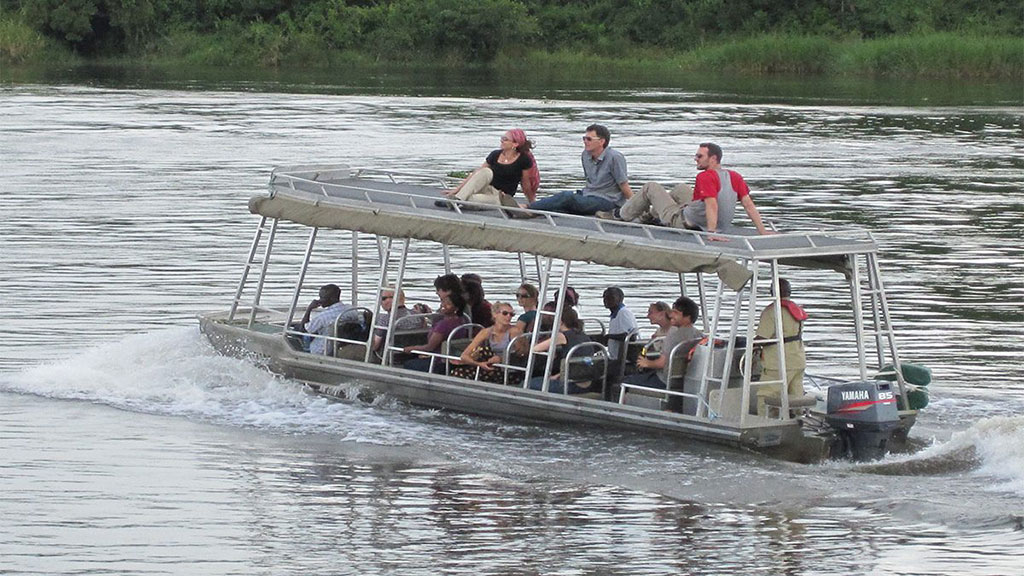
A boat trip on Lake Ihema is one of the park’s signature experiences. Gliding past papyrus-lined shores, you will see pods of hippos, large crocodiles, fish eagles and colonies of waterbirds, with elephants and buffaloes sometimes drinking at the water’s edge. Morning, afternoon and sunset departures are usually available; the sunset trip is the most atmospheric. It is also a welcome break from the vehicle on a warm day.
Camping Under the Stars
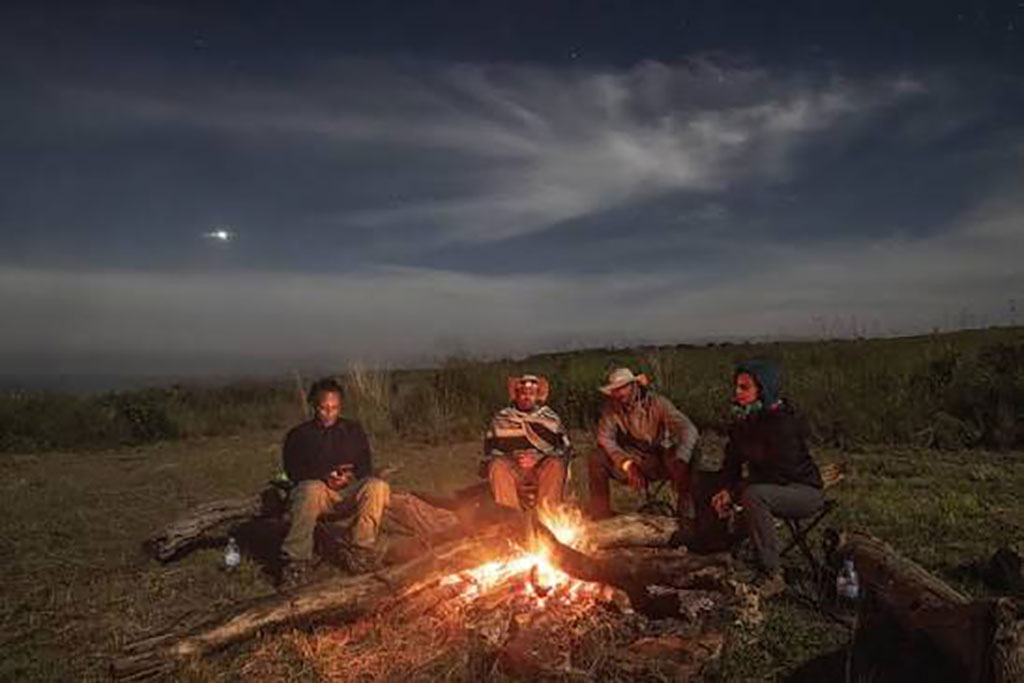
Several designated campsites, such as those near Lake Shakani and in the Muyumbu area, let you spend the night inside the park with the sounds of hippos and hyenas around you. Camping can be arranged fully equipped, combining the thrill of the wild with comfort and safety.
Self-Drive and Guided Game Drives
Game drives are the heart of an Akagera safari. The road network runs from the southern entrance through the lake region to the northern plains, and a full north-to-south drive is the best way to take in every habitat. With Trek Gorilla Uganda you travel in a 4×4 safari vehicle with a pop-up roof and an experienced driver-guide. Many travellers also add a freelance park guide from the reception centre, whose local knowledge of where lions, rhinos and elephants have recently been seen is invaluable.
Best Time to Visit the Park
Akagera is open all year, and because it is lower and drier than western Rwanda, it is warmer, with daytime temperatures often reaching the high 20s to low 30s Celsius. Rain has the biggest effect on your experience.
June – September,Best game viewing; short grass and animals concentrated near water; dusty roads; peak demand.
December – February, Very good wildlife viewing, warm weather, green landscapes after the short rains.
October – November, Fresh greenery, fewer visitors, migrant birds arrive.
March – May, Lush and quiet, excellent birding, possible lower rates; some tracks harder to use.
Where to Stay in Akagera National Park
• Luxury: Exclusive lodges such as Magashi, on a remote peninsula overlooking Lake Rwanyakazinga in the north, offer private game drives and boat trips in a quiet wilderness area.
• Mid-range to upmarket: Ruzizi Tented Lodge sits in the trees on the shores of Lake Ihema in the south, while Karenge Bush Camp provides a seasonal, back-to-nature tented experience in the centre of the park.
• Mid-range: Lodges on the southern hills, including options just outside the park boundary, offer pools and wide views at good value.
• Budget and camping: Designated campsites inside the park, plus guesthouses in nearby towns such as Kayonza.
Culture and Community Around Akagera
The communities of Rwanda’s Eastern Province share a rich pastoral heritage, and a visit to Akagera is an excellent opportunity to connect with it. Here the relationship between people, cattle and the land runs deep.
Rwanda’s Cattle Culture and the Inyambo
For centuries cattle have been at the centre of Rwandan culture, symbolising wealth, friendship and social bonds. Gifting a cow remains one of the highest honours one person can give another. The most celebrated breed is the Inyambo, a royal cow famous for its enormous, elegantly curved horns. Historically these cattle were trained and groomed for ceremonies and accompanied by poetry and song. In villages around Akagera you can meet herders, learn about traditional cattle-keeping, and taste fresh milk or ikivuguto, a traditional fermented milk.
Imigongo Art – A Unique Eastern Rwanda Tradition
Imigongo is a striking geometric art form unique to eastern Rwanda, traditionally made with cow dung mixed with ash, shaped into raised patterns and painted in black, white and red. Tradition credits its origin to Prince Kakira of the old Gisaka kingdom in the east. Women’s cooperatives in the Kirehe district, south of the park, keep the art alive, and visiting a workshop is a memorable cultural stop on the way to or from Akagera. Imigongo panels make a beautiful and meaningful souvenir.
Bunyoro-Kitara Kingdom
In Hoima and Masindi, the history of Bunyoro-Kitara is still alive. With time, you can visit sites linked to the kingdom and learn about its kings, including Kabalega, the Omukama who resisted colonial rule and whose name the falls briefly carried.
Frequently Asked Questions About Akagera National Park
No. Akagera is a savannah park. For gorillas, visit Volcanoes National Park in Rwanda or Bwindi in Uganda; for chimpanzees, Nyungwe Forest in Rwanda or Kibale Forest in Uganda.
The southern entrance is about 110–130 km from Kigali, roughly 2.5 to 3 hours by road.
The dry seasons from June to September and December to February offer the best game viewing. The wetter months are excellent for birding and quieter visits.
Yes. Rwanda is known as one of the safest and cleanest countries in Africa, and Akagera is well managed with strong security. Follow your guide’s instructions around wildlife at all times.
Yes. Since black rhinos were reintroduced in 2017, Akagera has been home to all of the Big Five: lion, leopard, elephant, buffalo and rhino. It is the only Big Five park in Rwanda.