
Wildlife
Home » Things To Do » Wildlife
Wildlife Safaris in Uganda and Rwanda: The Complete Guide
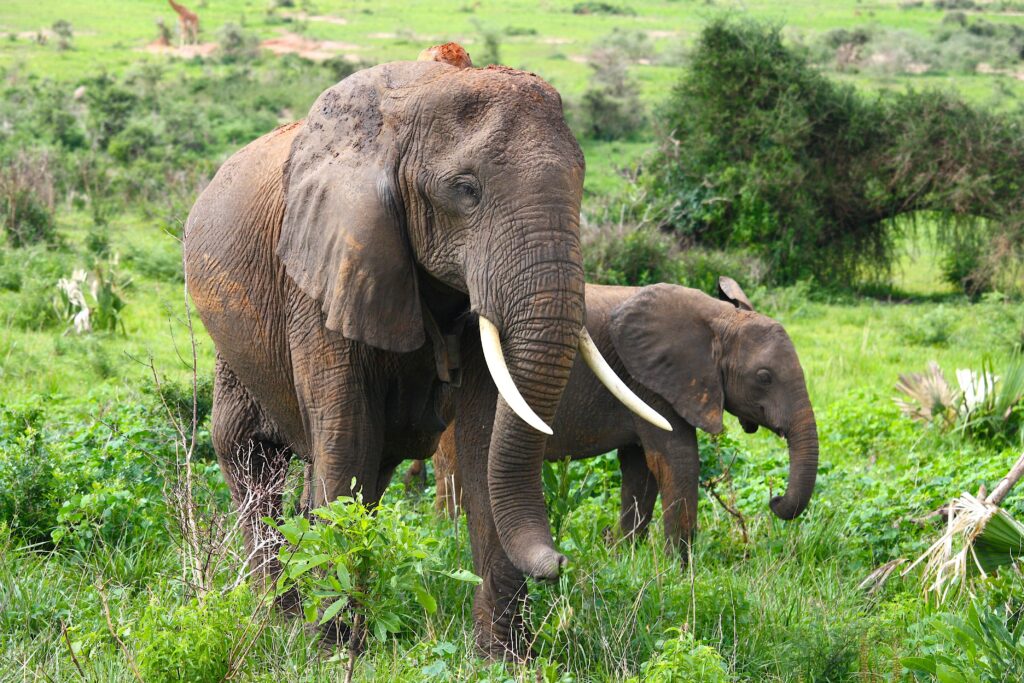
Gorilla trekking gets the headlines, but it’s a single hour, on foot, with one species. A wildlife safari is everything else: lions draped over tree branches, elephant herds crossing a channel at dusk, a boat gliding past hippos close enough to hear them breathe out. Uganda and Rwanda between them hold savanna, wetland, forest and semi-arid plains, and each habitat comes with its own cast.
What a Wildlife Safari Here Actually Involves
Unlike gorilla trekking, a wildlife safari isn’t built around one fixed, scheduled encounter. It’s a string of game drives, boat cruises and, in a few parks, walking or night safaris, spread across however many days you give it, with no permit capping how many people see a given lion pride on a given morning.
That looser structure is also what makes it flexible: a safari can run two days bolted onto a gorilla trip, or anchor a two-week circuit on its own, and the pace is set by you and your guide rather than a ranger’s clock.
Wildlife Safaris at a Glance
|
Main habitats |
Open savanna, wetland and channel, semi-arid plains, lakeshore woodland |
|
Top parks |
Queen Elizabeth, Murchison Falls, Lake Mburo and Kidepo Valley (Uganda); Akagera (Rwanda) |
|
Signature species |
Lion, including Ishasha’s tree-climbing lions, elephant, buffalo, leopard, hippo, Nile crocodile |
|
Rhino viewing |
Ziwa Rhino Sanctuary (Uganda, reintroduced population); Akagera National Park (Rwanda, reintroduced population) |
|
Typical activities |
Day and night game drives, launch cruises, walking safaris, horseback riding (Lake Mburo only), hot air ballooning (Murchison Falls) |
|
Minimum time needed |
2 to 3 days for one park properly; 5 to 7 days for a multi-park circuit |
Where to Go on a Wildlife Safari
Five parks do most of the work across the two countries, and each has a genuinely different character rather than being a smaller or larger version of the same savanna.
Queen Elizabeth National Park, Uganda
Queen Elizabeth is built around the Kazinga Channel, a natural waterway linking Lakes Edward and George that draws hippos, elephants and buffalo to its banks in numbers few other spots in the region can match. Its Ishasha sector, a separate pocket to the south, holds one of only two lion populations on the continent known to regularly climb trees, usually found draped across the low branches of its fig trees by midday.
Murchison Falls National Park, Uganda
Uganda’s largest national park is cut in two by the Nile, which narrows to a violent seven-meter gap at the falls themselves before widening back into the calm stretch downstream where launch cruises drift past dense hippo pods and some of the largest Nile crocodiles left in East Africa. The park’s northern delta grasslands hold strong numbers of lions, elephant and Rothschild’s giraffe, and it’s one of the few places in the region offering a hot air balloon safari over the savanna at dawn.
Lake Mburo National Park, Uganda
The closest savanna park to Kampala, at around three hours away, Mburo is also the gentlest introduction to Uganda’s wildlife: no resident lions, which means it’s one of the only parks in the region where walking and horseback safaris are permitted on foot among zebra, eland and impala. A boat trip on the lake itself adds hippos and a strong selection of waterbirds to a visit that works well as a first or last stop on a longer circuit.
Kidepo Valley National Park, Uganda
Tucked into Uganda’s remote northeastern corner against the Karamoja hills, Kidepo is the park serious safari travelers ask about once they’ve already done Queen Elizabeth or Murchison. Its semi-arid, wide-open valleys hold species found nowhere else in Uganda, including cheetah and ostrich, and its distance from Kampala, a long drive or a short scheduled flight, keeps visitor numbers genuinely low.
Akagera National Park, Rwanda
Once reduced to a fraction of its original size and wildlife population after decades of conflict and encroachment, Akagera has been rebuilt into Rwanda’s answer to a classic East African savanna park, with lions reintroduced in 2015 and black rhinos in 2017, restoring a genuine Big Five population inside a single compact park reachable in roughly two hours from Kigali. A cruise on Lake Ihema, inside the park boundary, adds hippo and crocodile viewing without a second game drive.
Uganda vs Rwanda for Wildlife: Which Should You Choose?
As with gorilla trekking, this comes down to trade-offs rather than one country being objectively better.
|
Uganda |
Rwanda |
|
|
Number of parks |
Several distinct parks across the country, each with a different habitat |
One primary park, Akagera, compact and efficient to visit |
|
Big Five access |
Spread across parks; rhino only at the separate Ziwa Sanctuary |
All five, including rhino, within Akagera’s single boundary |
|
Distance from capital |
1 to 9 hours’ drive depending on the park, or a short flight to some |
Roughly 2 hours’ drive from Kigali to Akagera |
|
Activity variety |
Widest range: walking and horseback safaris, hot air ballooning, multiple boat routes |
Game drives and a lake cruise; fewer activity types, less driving between them |
|
Good to combine with |
Bwindi or Mgahinga gorilla trekking, Kibale chimps |
Volcanoes NP gorilla trekking, Lake Kivu |
Travelers with a week or more who want habitat variety tend toward Uganda’s multi-park approach. Travelers wanting a tight, efficient Big Five safari that adds only a day or two to a Rwanda gorilla trip tend to choose Akagera instead.
The Big Five and Beyond: What You’ll Actually See
Lion, elephant, buffalo and leopard are realistic sightings across Uganda’s savanna parks and Akagera, though leopard remains genuinely elusive anywhere in Africa given how nocturnal and solitary the species is. Rhino is the exception that needs a specific stop: Uganda’s wild rhino population was wiped out by the 1980s, so Ziwa Rhino Sanctuary, a separate reserve outside the national park system, is the only place to track them on foot in Uganda, while Akagera’s reintroduced rhinos now live as a genuinely wild population inside the park itself.
Beyond the headline five, the supporting cast is just as much the point: Uganda kob, topi and Rothschild’s giraffe on the savanna, hippo and crocodile along every major waterway, and over a thousand recorded bird species between the two countries, from the prehistoric-looking shoebill to a long list of raptors and waterbirds that reward even travelers who didn’t come specifically to bird.
Ways to Experience the Wildlife
- Day game drives, the core activity in every park, typically run at dawn and late afternoon when animals are most active
- Night game drives, offered in parts of Murchison Falls and Queen Elizabeth, for nocturnal species like leopard, genet and hyena rarely seen by day
- Launch or boat cruises, on the Kazinga Channel, the Nile at Murchison Falls, Lake Mburo or Lake Ihema in Akagera, for water-level views of hippo, crocodile and waterbirds
- Walking safaris, available mainly in Lake Mburo where there are no resident lions, for a slower, on-foot perspective among plains game
- Horseback safaris, a Lake Mburo specialty, letting visitors approach grazing animals that tolerate a horse’s silhouette better than a vehicle’s
- Hot air balloon safaris over Murchison Falls, a dawn flight followed by a bush breakfast once the balloon lands
What a Day on a Wildlife Safari Actually Looks Like
Most days start before sunrise, with a 6am or 6:30am departure timed to catch predators still active from their night hunt before the heat sets in and everything beds down in whatever shade it can find. A mid-morning or midday break usually falls during the quietest wildlife hours, often used for a launch cruise instead, since water-based animals stay visible regardless of the sun.
The second game drive runs in the late afternoon into early evening, as the heat breaks and animals become active again, frequently ending with a sundowner stop, drinks in hand, watching the light change over the savanna before the drive back to camp.
Best Time for Wildlife Viewing
The dry seasons, June to September and December to February, concentrate wildlife around permanent water sources like the Kazinga Channel and the Nile, making sightings more predictable, and keep game drive tracks firm and passable. The wetter months bring lush scenery, dramatic skies and newborn animals across many species, along with muddier tracks and a little more searching required to find concentrated game.
What to Pack for a Wildlife Safari
- Neutral-colored clothing, khaki, olive or similar, rather than bright colors or stark white
- A warm layer for early-morning game drives, which start cold even in a hot country
- Sun protection: a hat, sunglasses and high-SPF sunscreen for hours in an open vehicle
- Binoculars, ideally one pair per person rather than shared
- A camera with the longest lens you reasonably have access to; animals rarely pose close to the road
- Insect repellent, particularly for launch cruises and evening game drives near water
- A reusable water bottle and any personal medication, since some parks involve long stretches without a shop
Wildlife Safari Etiquette
Fewer hard rules than gorilla trekking, since there’s no fixed hour or minimum distance set by a park authority, but the same underlying logic applies: you’re a guest moving through an animal’s home, not the other way around.
- Stay inside the vehicle at all times in predator areas; standing through a pop-up roof is usually fine, climbing out is not
- Keep voices low and movements slow near any sighting; sudden motion is what triggers a wild animal’s attention
- Never feed wildlife, even species that approach vehicles looking for food
- Let your guide position the vehicle; a good sighting angle matters less than not startling the animal
- Respect night game drive rules, including red-filtered spotlights that don’t disturb nocturnal species’ vision
Pairing a Wildlife Safari with Gorilla Trekking
Geography makes this an easy combination rather than a compromise. In Uganda, Queen Elizabeth National Park sits roughly between Bwindi and Kibale, close enough that most gorilla itineraries already route through it for a game drive or Kazinga Channel cruise along the way. In Rwanda, Akagera sits on the opposite side of the country from Volcanoes National Park, a longer add-on but still realistic within a 6 to 7 day trip.
Travelers tight on time often treat the wildlife portion as the savanna complement to the forest-bound gorilla trek: open skies and long sightlines after days of dense, dim forest, a genuinely different register of safari within the same trip.