
4-Day Kibale Chimpanzee Habituation and Bigodi Wetland Primate Walk
Overview
A standard chimpanzee trek gives you one hour with the group once they’re found. The Chimpanzee Habituation Experience gives you most of a full morning, following researchers and habituators as they work to get a still-wild community comfortable with human observation. This itinerary is built entirely around that deeper access, with a wetland walk added for the primates Kibale’s chimps share the forest with.
The full itinerary
The Chimpanzee Habituation Experience runs year-round, but the dry seasons, June to September and December to February, make the pre-dawn forest walk to find the night nests noticeably easier underfoot. Because permits are so limited, booking three to six months ahead matters more here than for a standard chimp trek.
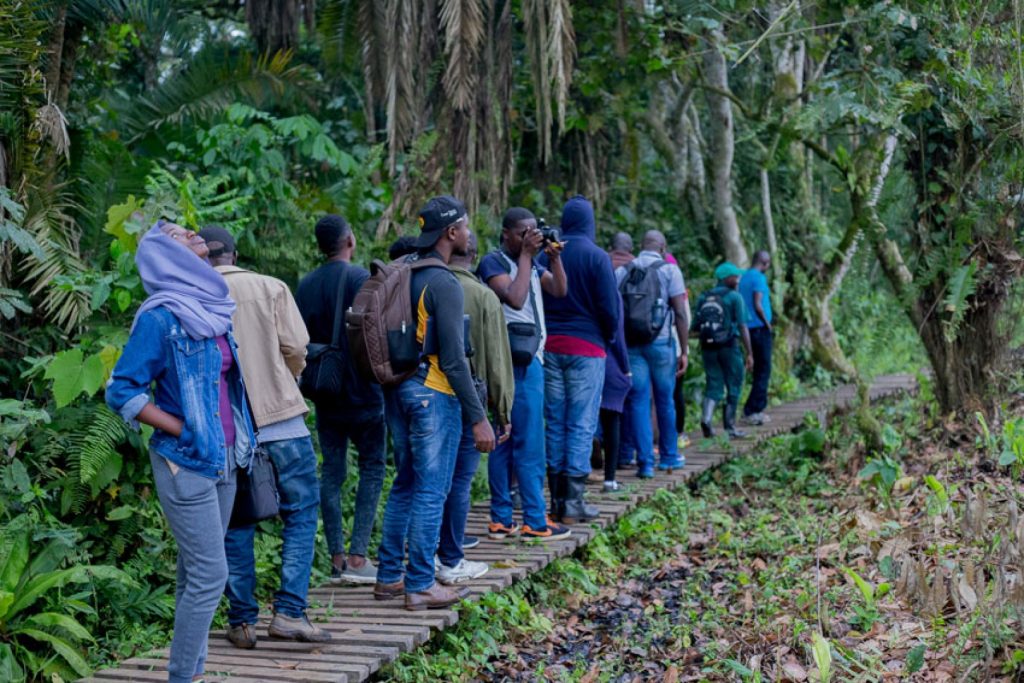
The drive from Kampala to the Kibale Forest area takes around five to six hours. With the afternoon still open, most travelers head straight to the community-run Bigodi Wetland Sanctuary, a two- to three-hour guided walk through papyrus swamp that regularly turns up red colobus, grey-cheeked mangabeys, L’Hoest’s and blue monkeys, and well over 200 recorded bird species.
Unlike a standard trek, the Habituation Experience starts before dawn, joining researchers as they locate the community’s night nests and stay with the chimps as they wake, feed and move through the forest, often for four hours or more rather than the standard one. Permits for this experience are capped well below the number issued for regular trekking, which keeps groups small and the pace unhurried.
With the primary activity complete, the day is left open. Many travelers choose a shorter guided nature walk through Kibale’s forest trails for birding and general primate sightings, or a half-day trip to the volcanic crater lakes scattered around nearby Fort Portal, an area known for dramatic scenery rather than wildlife.
The return drive retraces the route back toward Kampala or Entebbe, timed to connect with an evening flight or an overnight before departure.
With both treks complete, this day is left open by design. Most travelers choose either a Batwa cultural walk, learning the forest-based traditions of Bwindi’s original inhabitants from Batwa guides themselves, or a half-day trip to Lake Bunyonyi, one of the few lakes in the region safe for swimming.