
5-Day Ishasha Tree-Climbing Lions and Kazinga Channel Wildlife Safari
Overview
Queen Elizabeth National Park rewards travelers who give it more than a single night, and this itinerary does exactly that: five days built entirely around the park’s two signature wildlife experiences, the tree-climbing lions of Ishasha and the near-guaranteed game concentrations along the Kazinga Channel.
There’s no long transfer to a second park and no trekking required. It’s a straightforward, photography-friendly safari focused on one exceptional ecosystem.
The full itinerary
The dry seasons, December to February and June to September, make tracks in the Ishasha sector easier going and concentrate wildlife more predictably around the Kazinga Channel. The tree-climbing lions can be found year-round, though many guides find the behavior slightly more common in the hotter, drier stretches of the year, when the shade and breeze in the tree canopy offer real relief.
The drive from Kampala crosses the equator at Kayabwe, a five-minute photo stop most travelers can’t resist, before continuing on to Queen Elizabeth National Park. An afternoon game drive across the Kasenyi plains, close to the park’s northern gate, is usually the day’s reward, with resident lion prides often found resting in open grassland right beside the track.
A two-hour launch cruise along the Kazinga Channel, the natural waterway connecting Lakes Edward and George, is the single most productive wildlife activity in the park. Hippos crowd the banks by the hundred, elephants come down to drink in loose family groups, and buffalo, waterbuck and a long list of birds fill the gaps between them. The afternoon stays free for a second game drive around Mweya peninsula.
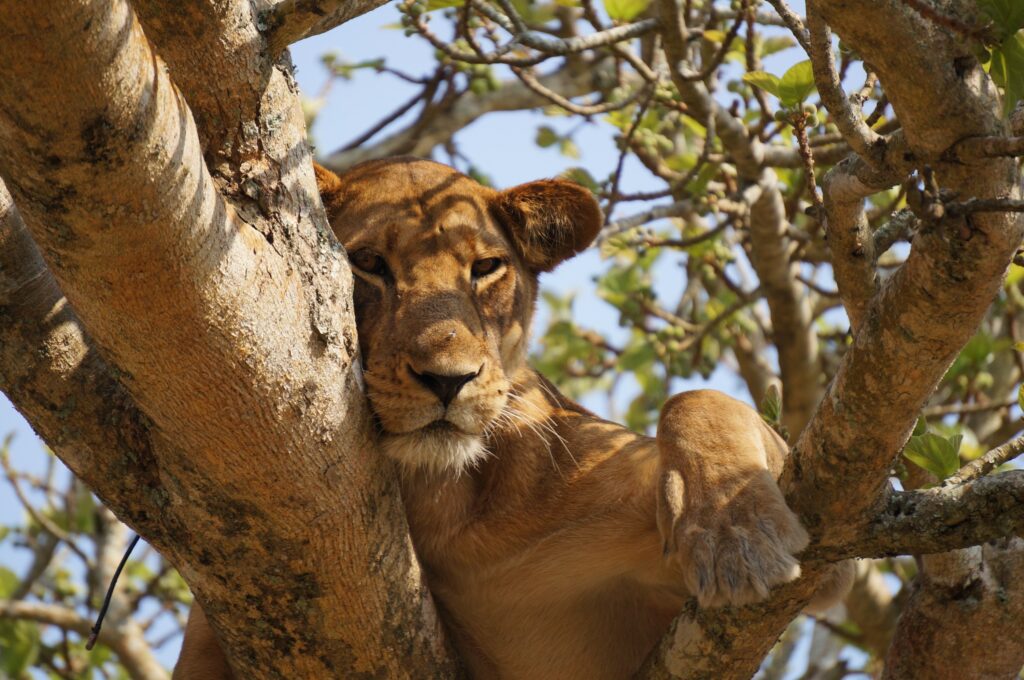
The drive south to the Ishasha sector takes around two hours, dropping into flatter, more remote terrain than the main park section. Afternoon light is often the best time to find the sector’s famous tree-climbing lions draped across the low branches of its fig trees, a behavior recorded in only one other African lion population.
With no need to travel elsewhere, the full day goes toward covering more of Ishasha’s tracks: checking known fig-tree favorites, following the Ntungwe River channels for buffalo and antelope, and simply allowing more time for the lions to be found, since they don’t climb every day and patience genuinely pays off here. Late afternoon, the route turns back north toward central Queen Elizabeth.
A final short game drive on the way out of the park is often possible depending on departure timing, before the drive back to Kampala or Entebbe to connect with onward travel.