
Kibale National Park
Kibale National Park ,the Primate Capital of the World
It often begins with a sound. Somewhere ahead in the forest, a single hoot rises into a chorus of wild, echoing screams the pant-hoot of chimpanzees calling to each other across the canopy. Your ranger smiles, turns off the trail, and a few minutes later you are standing a short distance from our closest living relatives as they feed, groom, play and drum on the buttress roots of giant trees. This is Kibale National Park, and there is no better place in East Africa to meet chimpanzees in the wild.
Covering around 795 square kilometres of western Uganda, close to the town of Fort Portal and in the shadow of the Rwenzori Mountains, Kibale protects one of the loveliest tracts of tropical forest in the country. It is home to about 1,500 chimpanzees and 13 primate species in total, one of the highest primate densities and diversities in Africa. Add around 375 bird species, forest elephants, a community-run wetland full of monkeys and birds, and a landscape of crater lakes and tea estates on its doorstep, and you have one of Uganda’s most rewarding destinations.
From Forest Reserve to Primate Sanctuary
For centuries, the forests of this region lay within the lands of the Batooro people and the Tooro Kingdom, whose capital, Fort Portal, sits just to the northwest. Local communities used the forest for food, medicine, building materials and hunting, and many of its plants still have traditional uses today.
In 1932, the colonial government declared Kibale a forest reserve, mainly to manage it for timber. Parts of the forest were logged and planted with exotic trees over the following decades. In 1964, a game corridor was set aside to the south, protecting the route used by elephants and other wildlife moving between Kibale and what is now Queen Elizabeth National Park.
Kibale also became one of the most important forest research sites in Africa. Scientists based at the Makerere University Biological Field Station at Kanyawara have studied its primates, trees and ecology for decades, and long-term chimpanzee research here has shaped what the world knows about chimpanzee behaviour. The Ngogo chimpanzee community, in the centre of the park, is one of the largest ever recorded.
The Park's Sectors and Landscapes
Kibale is mostly moist evergreen and semi-deciduous forest, mixed with patches of grassland and swamp. Knowing its main areas helps you plan a trip that matches your interests and travel time.
Kanyanchu, in the centre of the park, is the main visitor centre and the starting point for chimpanzee trekking, the habituation experience, night walks and forest birding. Most lodges are within a short drive, and the road from Fort Portal passes right by it.
The Sebitoli sector lies in the north of the park, close to the main Kampala–Fort Portal road. It is quieter and less visited, with guided forest walks, good birding, monkeys and views towards the Rwenzoris. It is a good option for travellers short on time or wanting a peaceful walk away from the main trails.
Kanyawara is home to the Makerere University Biological Field Station and decades of primate and forest research. It is mainly a research area rather than a tourism centre, but it is part of what makes Kibale famous.
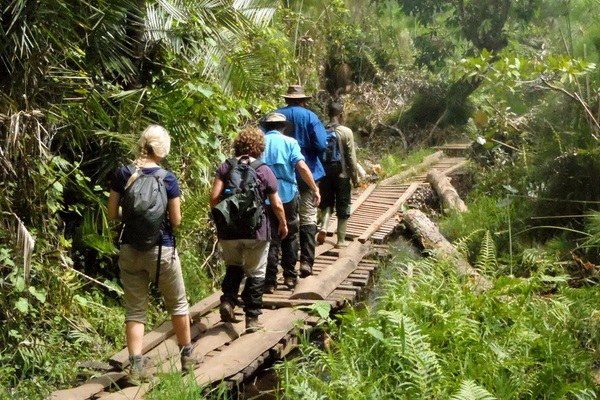
Just outside the park, close to Kanyanchu, the Magombe swamp is protected as the Bigodi Wetland Sanctuary, a community-run reserve managed by the local association KAFRED. A boardwalk and trail lead through papyrus, swamp forest and farmland, with excellent birds and up to eight primate species.
West of the park, a field of volcanic crater lakes is scattered among hills, forest patches and tea estates. Lakes such as Nyinambuga, Nyabikere, Nkuruba and Lyantonde are beautiful spots for walks, birding and views, and many lodges are set on their rims. Lake Nyinambuga appears on Uganda’s 20,000-shilling banknote.
In the south, the forest gives way to woodland and grassland that link Kibale to Queen Elizabeth National Park. This corridor allows elephants, buffaloes and other animals to move between the two parks, and it is the route most travellers follow on their onward journey.
Things to Do AT Kibale National Park
Kibale offers one of the best primate experiences in Africa, along with gentle walks, culture and scenery.
Bigodi Wetland Sanctuary Walk
A guided walk of around three hours through the Bigodi Wetland Sanctuary is the perfect partner to chimpanzee trekking. Led by local guides, you follow a trail and boardwalk through swamp and forest edge, looking for great blue turacos, kingfishers, papyrus specialists and up to eight primate species, including red colobus and grey-cheeked mangabeys. The sanctuary is run by the community, and your fee supports local schools and projects.
Fort Portal and the Amabere Caves
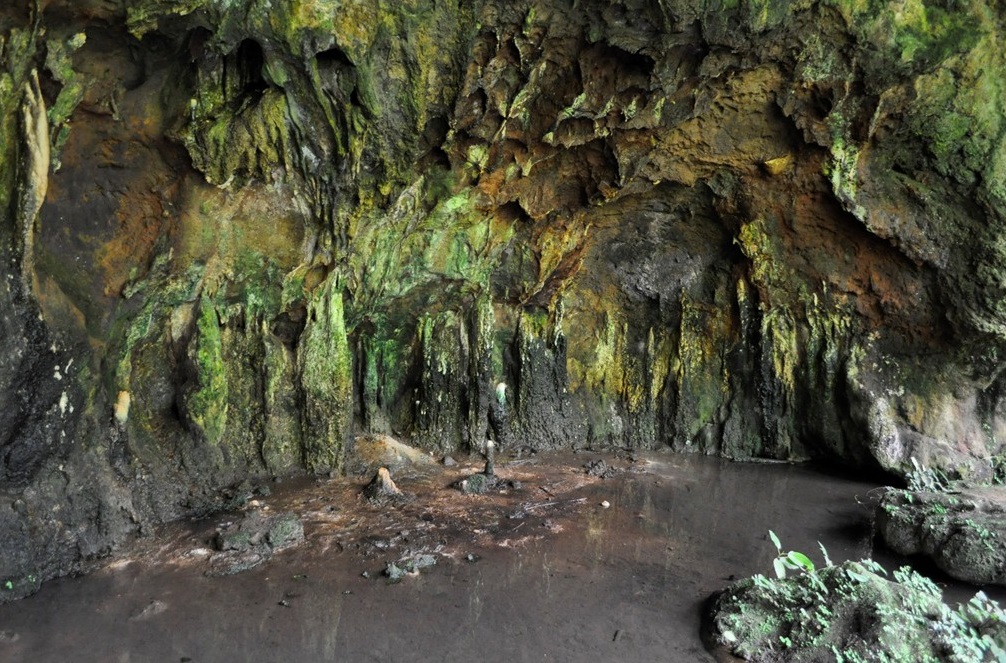
Fort Portal, one of Uganda’s prettiest towns, is a short drive from the park. Nearby are the Amabere ga Nyina Mwiru caves and waterfall, linked to a legend of the Tooro people, and the palace of the King of Tooro on a hill above town. Tea estates surround the town and make a scenic drive.
Best Time to Visit the Park
Kibale is open year-round, and chimpanzee trekking takes place every day. Because of its altitude, the climate is pleasant, with temperatures usually between about 14°C and 27°C. As a rainforest, Kibale can see rain at any time, but there are clear drier and wetter seasons.
June – September, Best trekking conditions; drier, less slippery trails; busiest time, so permits and lodges book up early.
December – February,Good trekking and pleasant weather; popular around the festive season.
March– May, Lush forest, fewer visitors and lower lodge rates; trails muddy and slippery; chimps can be easier to find when fruit is plentiful.
October – November, Green forest, quieter trails and good birding with migrants arriving
Where to Stay
Accommodation ranges from simple guesthouses to luxury lodges, spread between the forest edge near Kanyanchu, the village of Bigodi and the crater lakes. The right choice depends on your budget and how early you need to reach the trekking briefing.
- Luxury: High-end lodges on the rims of the crater lakes and at the forest edge offer private cottages, fine dining and views over the lakes or the Rwenzoris.
- Mid-range: Comfortable lodges and tented camps near Kanyanchu and Bigodi, many set in forest or gardens and close to the trekking start point. Primate Lodge Kibale is a long-standing favourite for its location inside the park beside the visitor centre.
- Budget: Simple guesthouses, bandas and campsites in Bigodi and around the crater lakes, suitable for independent and budget travellers.
Culture and Community
Kibale’s story is closely tied to the people who live around it. Two main communities border the park, and community tourism here is among the best organised in Uganda.
The Batooro and the Tooro Kingdom
The Batooro are the traditional people of the region, with their own kingdom, Tooro, whose king is known as the Omukama. Their culture is known for its pet names (empaako), warm hospitality, music and dance. Fort Portal is the kingdom’s capital, and the royal palace overlooks the town.
The Bakiga
The Bakiga migrated to the Kibale area from the densely populated highlands of southwestern Uganda during the twentieth century. Hard-working farmers, they grow bananas, tea, maize and beans on the land around the park and take part in many community tourism projects.
Frequently Asked Questions About Kibale National Park
Yes. The Uganda Wildlife Authority sets a minimum age for chimpanzee trekking. Ask us for the current rule when you book, and we will suggest alternatives such as Bigodi Wetland for younger children.
A reasonable level of fitness is enough. The terrain is gentler than gorilla trekking in Bwindi, but trails can be muddy and you may need to move quickly off-trail to keep up with the chimps.
A reasonable level of fitness is enough. The terrain is gentler than gorilla trekking in Bwindi, but trails can be muddy and you may need to move quickly off-trail to keep up with the chimps.
The whole activity usually takes two to four hours, including up to one hour with the chimpanzees once you find them. The habituation experience lasts most of the day.
It lies in western Uganda, close to Fort Portal, spanning parts of Kabarole, Kamwenge and Kyenjojo districts. It is roughly 300–330 km from Kampala.